
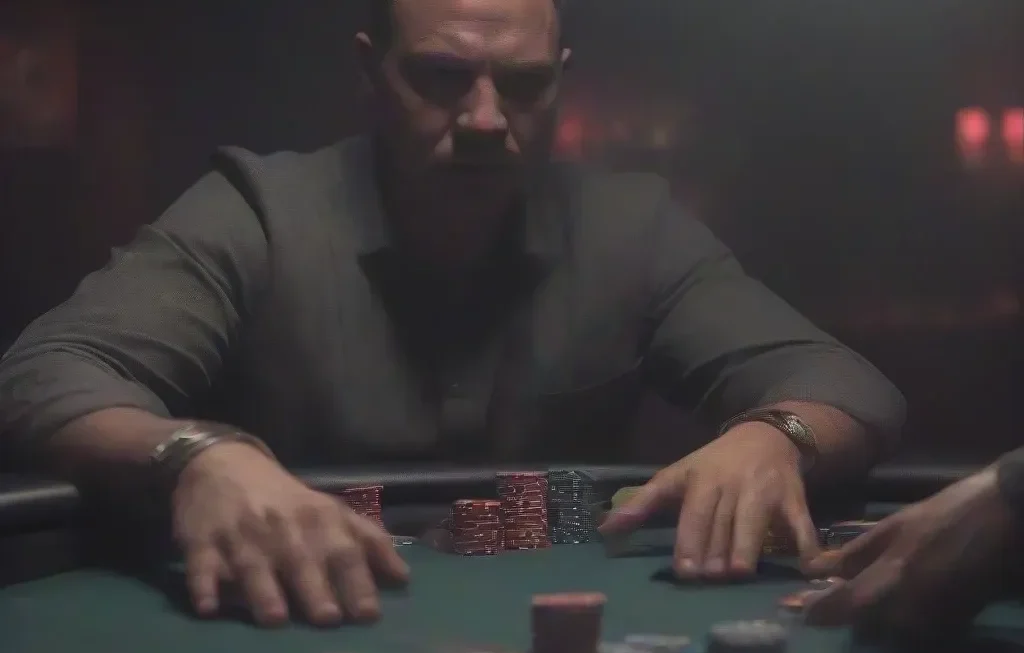
Picture this: the final table of a major poker tournament. Blinds are astronomical, tension is thicker than the felt, and a player pushes all-in with absolute air. His opponent, a seasoned pro, stares him down, trying to pierce the carefully constructed facade. This is high-stakes poker. A world where fortunes are won and lost on a single decision. Sometimes, even the best players misjudge, their bluffs exposed in humiliating fashion, costing them everything.
Bluffing is an art, pivotal for success at high stakes. But, it is also a science of calculated risk, range analysis, and psychological reads. Making mistakes can be a costly proposition. This article dissects the common pitfalls players face when bluffing and provides actionable strategies to avoid them. Mastering these concepts is the difference between being a fish and becoming a shark in the high-stakes poker world. Learn to control risk, read your opponents’ minds, and turn your bluffs into weapons of mass destruction.
Why Bluffs Fail: Decoding the High-Stakes Mindset
In the captivating realm of high-stakes poker, the terrain shifts dramatically. The carefree bluffs that might succeed in lower-stakes games often crash and burn against seasoned opponents. This divergence stems from fundamental differences in player psychology. Lower-stakes games are populated with more recreational players. The high-stakes arena is inhabited by sharks, individuals with ice in their veins and countless hours logged studying the game. They aren’t just playing cards; they’re dissecting souls.
These seasoned pros are acutely risk-averse. They’ve learned the hard way that loose calls can be incredibly costly. Consequently, they demand stronger evidence before committing chips. This means your standard semi-bluff on the river isn’t going to cut it. You need a meticulously crafted narrative, one that holds up under intense scrutiny. High-stakes games often involve smaller, tighter player pools. This fosters an environment where reputations are forged, and player histories become invaluable tools. Every hand you play contributes to your overall image, and observant opponents are constantly compiling data.
A seemingly innocuous check-raise from you three weeks ago might be recalled and factored into their decision when you make a similar move today. This adds another layer of complexity to the bluffing game. It’s not just about your cards; it’s about their perception of your cards. It’s about leveraging (or misusing) their understanding of your style.
The Importance of Reputation and History
In high-stakes poker, reputation is currency. A carefully cultivated image can be as valuable as a royal flush. Imagine you’ve built a reputation as a tight, aggressive player – someone who only bets big with the nuts. Now, you find yourself in a crucial pot, representing a monster hand. Your opponent, knowing your history, might be more inclined to fold a strong hand, even if they suspect you’re bluffing. Why? Because the risk of being wrong outweighs the potential reward. Conversely, if you’re known as a loose cannon, a habitual bluffer, your big bets will be met with skepticism. Your opponents will be itching to call you down, eager to expose your hand. Ethical considerations also come into play. While exploiting your image is part of the game, deliberately misleading opponents with false tells can cross a line. Maintaining a balance between strategic deception and outright dishonesty is crucial for long-term success and respect.
Reading Beyond the Cards: Detecting Micro-Expressions and Betting Patterns
The ability to read your opponents is essential. But, in high-stakes poker, you need to go beyond basic tells. You need to become a master of observation, picking up on subtle micro-expressions and analyzing betting patterns with laser-like focus. Micro-expressions – those fleeting, involuntary facial movements – can reveal a wealth of information. A slight widening of the eyes might indicate excitement, while a subtle lip compression could signal doubt or discomfort. Learning to recognize these signals takes practice and keen attention to detail. Betting patterns are equally revealing. A sudden change in bet sizing, a hesitation before acting, or even the speed with which someone places their chips can provide valuable clues about the strength of their hand.I once observed a player who consistently paused for a split-second longer when bluffing. It was almost imperceptible, but once I noticed it, I was able to exploit it repeatedly. By studying your opponents’ tendencies and correlating them with specific actions, you can develop a powerful arsenal for detecting deception and making more informed decisions.
The Art of the Fold: Knowing When to Abandon Ship
Folding a bluff is an art form, a subtle maneuver that separates seasoned poker players from the impulsive gamblers. It’s not about admitting defeat; it’s about recognizing reality. It’s about understanding that sometimes, the best play is to cut your losses and live to fight another hand. Because in poker, survival and longevity are paramount. A well-timed fold saves chips, preserves your bankroll, and ultimately contributes to a positive return on investment. It demonstrates discipline, a crucial skill more valuable than any aggressive bet.
The ability to recognize when a bluff is unlikely to work is as crucial as the bluff itself. Some players get married to their bluffs, stubbornly pushing forward even when the signs scream “danger.” Don’t be that player. Learn to detach yourself, analyze the situation objectively, and make the mathematically sound decision, even if it means swallowing your pride. Remember, poker is a marathon, not a sprint. Each decision, including the decision to fold, impacts your long-term profitability.
A good fold can throw misleading information as well, making your opponents think you are weak, so they can get caught in a great trap later. Poker is all about this. Sometimes a good fold hurts. You even see your opponent that was not betting much hitting a perfect card on the river. And your fold feels worse. But good poker players are those that know when to save their chips, and when to go all in. In one-on-one situations it is the same. You must know when to risk it all and when to securely quit. No shame in that.
Calculating Risk vs. Reward and Expected Value
Understanding the risk/reward ratio is vital when considering a bluff. First, calculate the potential reward: how much is in the pot plus your opponent’s possible call? Then, assess the risk: how much will it cost you to make the bet? Divide the risk by the potential reward to determine the ratio. A favorable ratio means the reward outweighs the risk. Also calculate your expected value (EV). This is your probability of winning multiplied by the potential win, minus your probability of losing multiplied by your potential loss. If the EV is negative, folding is quite often the superior play. The breakeven point is the percentage of times your bluff needs to work to be profitable. Calculate this by dividing the risk by the total pot after your bet. If you estimate your bluff success rate is lower than this percentage, then a fold is the right move.
Identifying Unfavorable Board Textures and Runouts
The board texture significantly influences the credibility of your bluff. High-coordinated board textures, like those with multiple suited cards or connected cards, should be approached with caution. For example, if the flop comes down two hearts and a diamond, or cards like 8-9-10, it becomes much easier for your opponent to have a strong hand, like a flush or straight. Paired boards also present problems. If the board pairs, your opponent is more likely to have a full house. These are extremely unfavorable textures to bluff into, as it’s difficult to convincingly represent a stronger holding than your opponent. Also, be careful as turn and river cards fall. Did it complete a straight draw that was out there, or make an obvious flush? These runouts can make your bluff much less believable.
The High-Stakes Bluffing Landscape: A Different Battlefield
High-stakes poker isn’t just about bigger pots; it’s a completely different ecosystem compared to the micro and low-stakes games. The money is significant, and the players are generally much more skilled, more disciplined, and more observant. Game selection and table selection become critical skills, almost as important as your ability to read hands. You’re not just battling random players making wild calls; you’re facing seasoned pros who’ve seen it all. This means the bluffs need to be carefully constructed and timed. A poorly executed bluff can be incredibly costly, not just in the immediate hand, but in future interactions with the same opponent. Think of it less as a typical poker game and more as a high-risk investment where every decision impacts your bottom line. The pressure is immense, the swings are wild, and the competition is fierce. Entering this arena unprepared is a recipe for disaster.
Smaller Player Pools and Increased Familiarity
One of the defining characteristics of high-stakes is the relatively small player pool. You’ll encounter the same faces repeatedly, forging game history and building intricate opponent reads. This familiarity changes the entire dynamic. Players are constantly trying to exploit tendencies and leverage past interactions. Do they remember that crazy bluff you pulled last week? You bet they do. This means you need to be acutely aware of your table image and how your opponents perceive you. Good memory of the games, especially hands you have seen, and the ability to adapt your strategy accordingly are essential in order to thrive. Bluffing frequency, stack sizes, and even subtle tells become crucial pieces of the puzzle.
Higher Risk Aversion and Tighter Ranges
The sheer amount of money involved makes high-stakes players more risk-averse. This often translates to tighter pre-flop ranges and a greater willingness to call down with marginal hands. The math is simple: losing a massive pot hurts more than winning a small one feels good. This doesn’t mean you should only value bet. Recognizing when your opponent is being overly cautious and exploiting that hesitancy with well-timed bluffs is key. However, be prepared to show down good hands more often, because loose-aggressive plays become less common. Mastering range analysis is paramount; understanding which hands your opponent is likely to hold in any given situation allows you to determine whether a bluff is likely to succeed. Sometimes, folding is the most profitable play. The meta is tight and hard. When you see the chance to be more loose you should take it, but take it carefully.
Advanced Bluffing Adjustments for High-Stakes Play
To thrive in high-stakes poker, mastering advanced bluffing techniques is essential. Simple bluffs are easily read by experienced opponents, making nuanced strategies a necessity. Adjusting bluffing tactics involves understanding range merging, blockers, bet sizing manipulation, and exploiting the meta-game.
Merging Ranges and Utilizing Blockers Effectively
Range merging involves strategically incorporating medium-strength hands into your bluffing range, making it harder for opponents to discern your true hand strength. For example, on a board like A-K-Q-J-7, holding 9-8 could be used as a bluff. While it has some showdown value, it’s also a great bluffing candidate, as it blocks straights. Conversely, range polarization is a good strategy to be used when you either have a very strong hand or a stone cold bluff. Blockers, specific cards in your hand that reduce the likelihood of your opponent holding certain strong hands, are powerful tools. If you hold the Ace of spades on a board where a flush is possible, it significantly decreases the chance your opponent has the nut flush, making a bluff more credible. While blockers can enhance bluffs, relying solely on them can be predictable. An opponent might exploit this tendency, making calls they wouldn’t otherwise.
Manipulating Bet Sizing to Confuse Opponents
Bet sizing is a critical component of advanced bluffing. Mixing bet sizes can create confusion and induce errors. Overbets, bets larger than the pot, can be effective bluffs as they represent extreme strength or desperation. Imagine a scenario where the board is wet, like two pairs showing. Overbetting can pressure your opponent to fold medium-strength hands that might otherwise call a smaller bet. On the other hand, underbets, small bets relative to the pot, can be used to extract value from weaker hands or to represent weakness. If you are playing against very aggressive players, min bets can be used to induce them to raise. Varying bet sizes keeps opponents guessing and prevents them from accurately assessing your hand strength. However, inconsistent bet sizing can be a tell in itself. The key is to make your bet sizing seem random and unpredictable.

Case Studies: Learning from High-Stakes Bluffing Disasters (and Successes)
Examining real-world poker hands offer a great way to break down the art of bluffing. By studying both successful and unsuccessful bluffs, players can get a better understanding of what to do right and wrong in certain situations.
Successful Bluff Example
Consider a hand where a player with a weak holding executes a well-timed bluff on the river. The board texture is coordinated, with multiple draws possible. The “hero” bets aggressively, representing a strong hand.
Their opponent, holding a decent but not premium hand is forced to fold because the bet size and board texture, makes it look like “hero” has the nuts. Key takeaways include sizing and board texture.
Failed Bluff Example
A player attempts a bluff in a high-stakes cash game. Preflop action sees a raise and a call, leading to a flop that favors the initial raiser’s range. The bluffer, holding complete air, continues with aggression on the flop and turn.
However the opponent calls because they have a strong hand. The bluffer goes all in on the river, but the opponent is not swayed and calls, winning the pot. Key takeaways: hand reading and considering opponent tendencies are crucial.
Analyzing these high-stakes hands provides actionable insights into the art of bluffing. By understanding the different factors that contribute to success and failure, poker players can improve their decision-making process and boost their overall strategy.
Conclusion
To thrive in the demanding arena of high stakes poker, mastering the art of strategic bluffing and tactical folding is essential. Balancing aggression with caution, understanding when to push your advantage and when to concede, is key to long-term success. Develop your risk management abilities and strategic thinking will allow you to navigate the poker landscape. The journey to becoming a formidable player is paved with continuous learning, adapting to evolving opponents, and refining your poker strategy. Put these insights into practice and watch your game skills soar to new heights.